The Asian hornet (Vespa velutina) is an invasive alien species that has been found in the Netherlands since 2017. The hornet is harmful to honeybees, bumblebee species, and other pollinating insects, thereby endangering the ecosystem and our environment. For fruit growers, for example, it is a catastrophe if pollinating insects are killed in large numbers.
In 2017, Robor discovered the first Asian hornet nest to establish itself in the Netherlands. At the time, this was done using a drone equipped with a thermal camera.
Nests must therefore be located in order to control them. An effective method for doing this is to attach a small transmitter to the hornet. In 2023, Robor Nature developed a system that is revolutionary in many ways for tracking hornets using a BLE microtransmitter. Thanks to modern radio technology, targeted searches can be conducted using handy directional receivers. The transmitters can also be tracked via a smartphone, which makes the search easier.
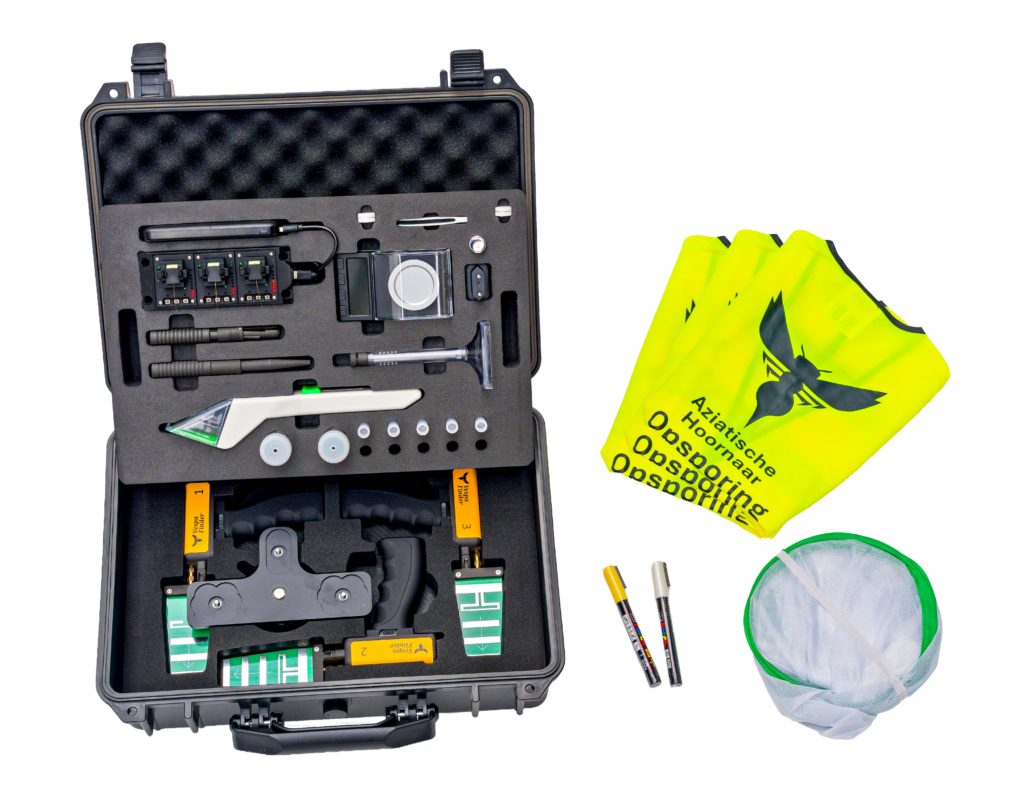
YL-Asian Hornet Detection Kit
Everything in one case no need to buy anything extra later.
Includes 5 transmitters, capable of locating up to 100 nests. Because the transmitters are reusable!
2 strong magnets to automatically retrieve the transmitters (transmitter recovery).
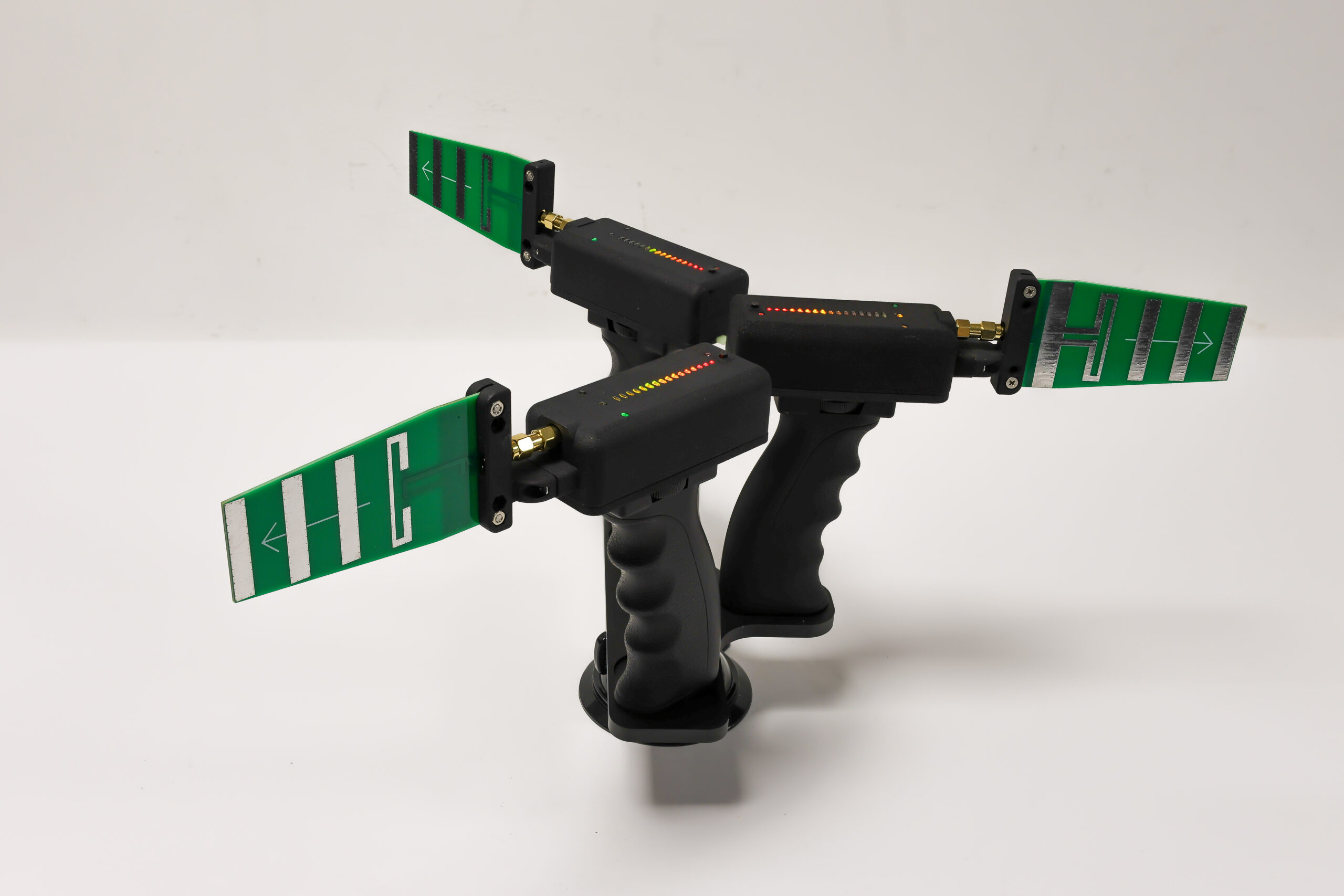
3 ultra-sensitive and directional receivers, usable with or without a cell phone or VF-app!
Multi-chargers for the transmitters (3x) included.
Installation tools included, so no messing around with sedation, glue, or application. Installation is safe and fast.
Includes a scale, marking pens, a tent, and vests.
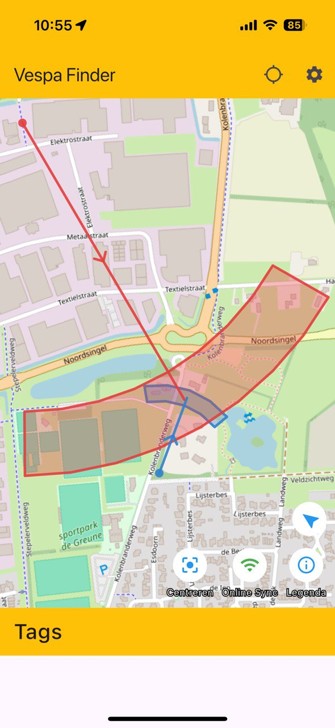
VespaFinder APP (free)—this app not only helps locate the nest but also provides a prediction of the nest’s position, allowing the nest to be found in 20–30% of cases without needing to use the transmitters.
The transmitters
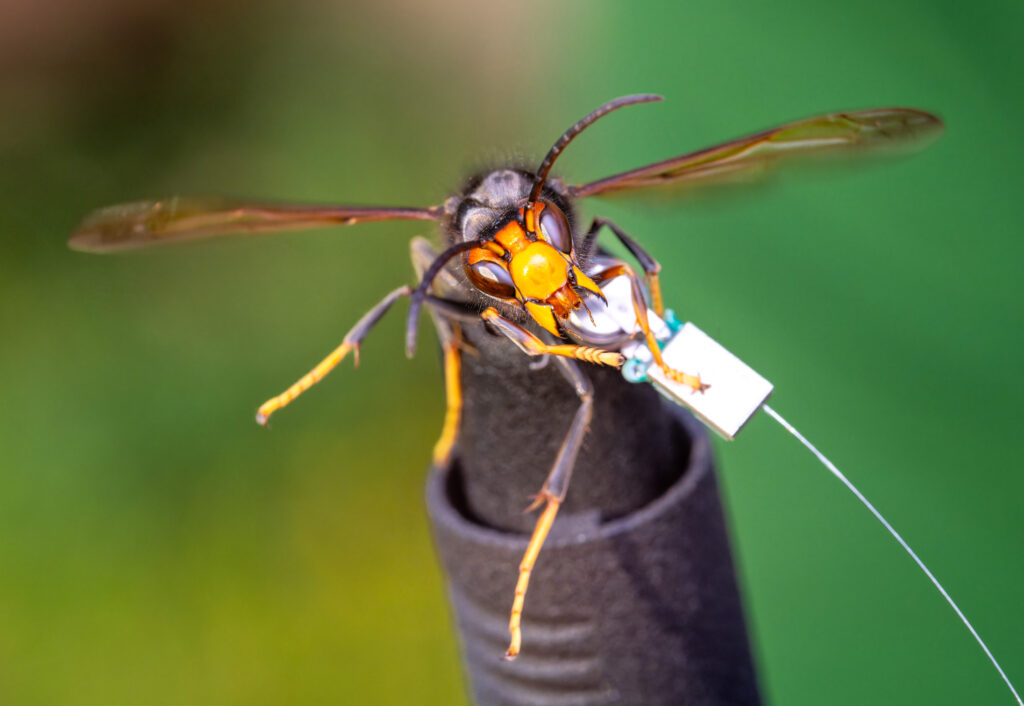
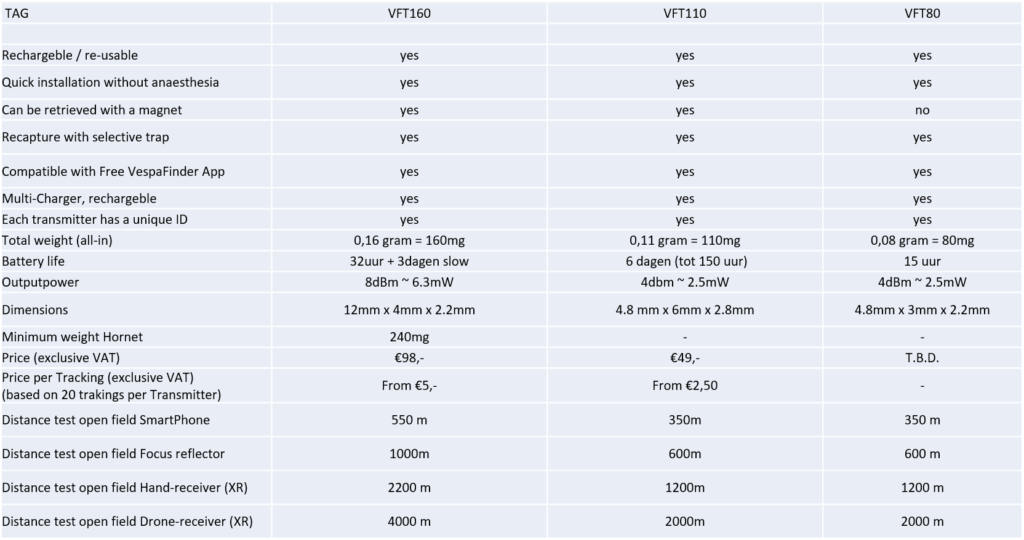
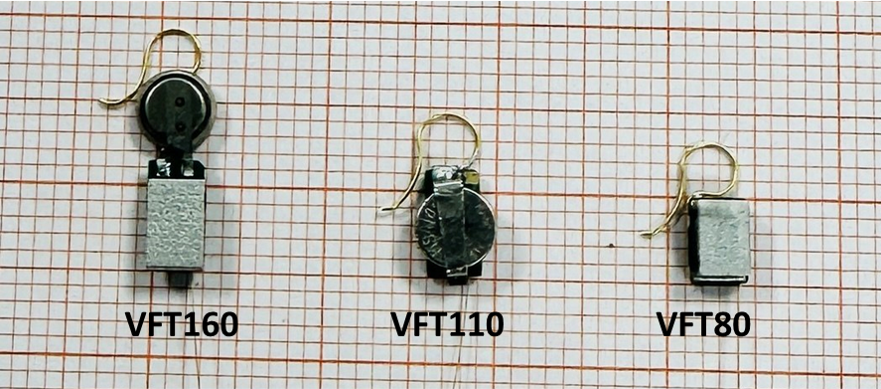
In 2023, Robor developed the VespaFinder Tag 160 (VFT160 = 160 mg). This BLE transmitter has a high transmission power, and as a result, more than 2,500+ hornet nests had already been successfully located by 2025. What makes this transmitter unique is the hook used to attach it to the hornet. It is important that the hornet can fly well with it, but even more important is that it can walk well with it. This prevents the hornet from constantly preening itself while carrying the transmitter.
In 2025, Robor developed the vespaFinder Tag 80 (VFT80 = 80mg), which is rechargeable and lasts 15 hours. It weighs half as much as the original but also has half the output power, so it has a shorter range. However, it is very suitable for tracking common wasps or bees as well.
In 2024, Robor released the VespaFinder app. With this app, you can easily predict the location of the nest, which means that in 20–30% of cases, the nest is found without even using the transmitter. And the biggest advantage of this prediction is that the transmitter’s range has become less relevant, because now nests located 2 km away are also easily found within the predicted search area.
The VFT160 is rechargeable and reusable and can be automatically retrieved by placing a magnet on the wing pot. This works very effectively, allowing 80–95% of the transmitters to be recovered without any further action required. Unfortunately, with the VFT80 (80 mg) transmitter, it is not possible to automatically retrieve it using the magnet; retrieval must be done using a butterfly net or a selective trap.
That’s why Robor is introducing a third transmitter, the VFT110 (110 mg), which comes with a rechargeable and replaceable battery, ensuring you’re always ready to transmit. You can charge the battery in advance, so the transmitters are always ready for immediate use. This makes it easy to locate multiple nests in a single day.
The VFT110 has a battery life of 150 hours, automatically returns to the magnet, and is also ideal for locating primary nests (or workers weighing less than 240 mg).
Thanks to the position prediction feature in the VF app, the new handheld receiver (XR), and the new VFT110 transmitter, we can now offer our kits at a lower price. In addition, the rechargeable transmitters offer a major added benefit: they comply with the EU Battery Regulation (2023/1542) and will remain usable even after 2026. This makes them both sustainable and future-proof.
The transmitters photographed side by side on graph paper.
Installation transmitter
Using specially designed auxiliary tools, the transmitter can be easily attached to the Asian hornet. All necessary tools can be found in the AH detection kit.
In 2024, Robor developed the VespaFinder Receiver (VFR). This Bluetooth (BLE) receiver is highly sensitive and indicates the direction in which you should search for the nest. The search kits (Pro160T / Pro110T) come standard with three of these handheld receivers so that searches can be conducted as a team. However, they can also be mounted on a vehicle, allowing a single user to make optimal use of the reception in all directions.
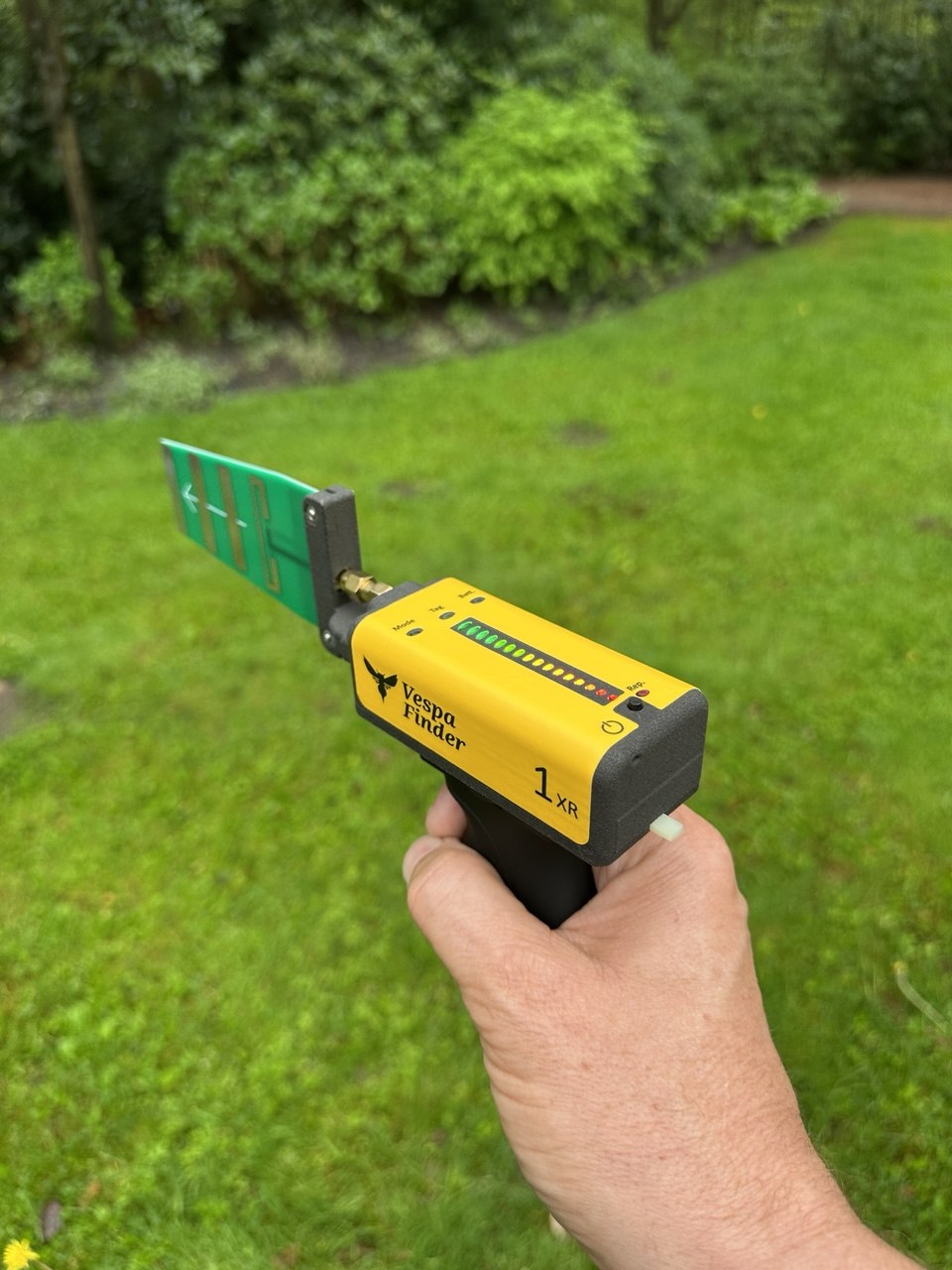
In 2026, Robor further improved this receiver, significantly increasing its range. The new VespaFinder Receiver Extended Range (VFR_XR) allows you, as a searcher, to walk directly to the nest without needing a smartphone. The integrated signal strength meter indicates the direction of the strongest signal. This makes it safer for the user because it’s easy to tell whether the nest is high up in a tree or 5 meters in front of you in a bush.
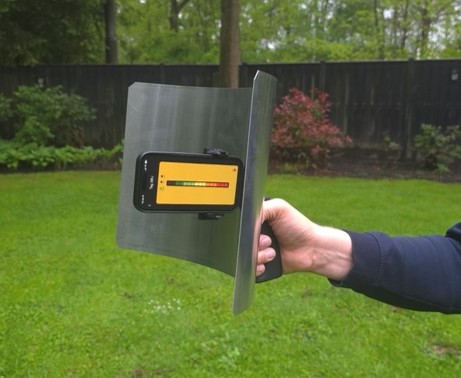
VespaFinder Focus
This new feature makes your smartphone direction-sensitive and enhances its signal reception.
This allows you to walk toward the nest without any trouble. It also makes searching with a smartphone safer, as you can now easily see whether the nest is high up in a tree or in the bush in front of you.
Compatible with Android and iOS phones.
Indicates the direction to walk via the VespaFinder App so that other searchers are also aware of the search direction.
Patent pending.
Searching by car
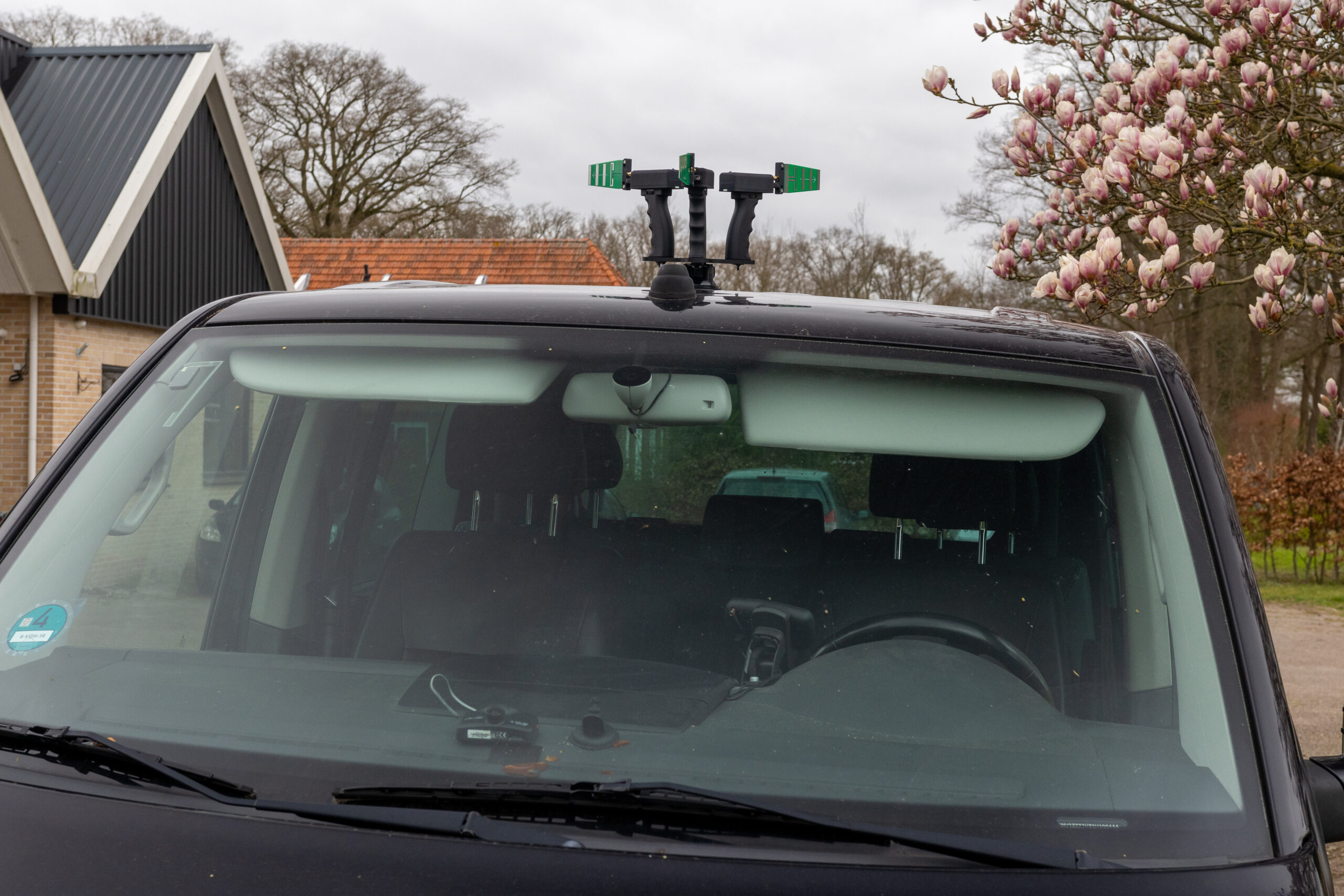
The three ultra-sensitive receivers are easy to install in the car using the suction-cup antenna mount. Once in the car, you can use the VF app to view real-time data from the three receivers.
Searching by drone
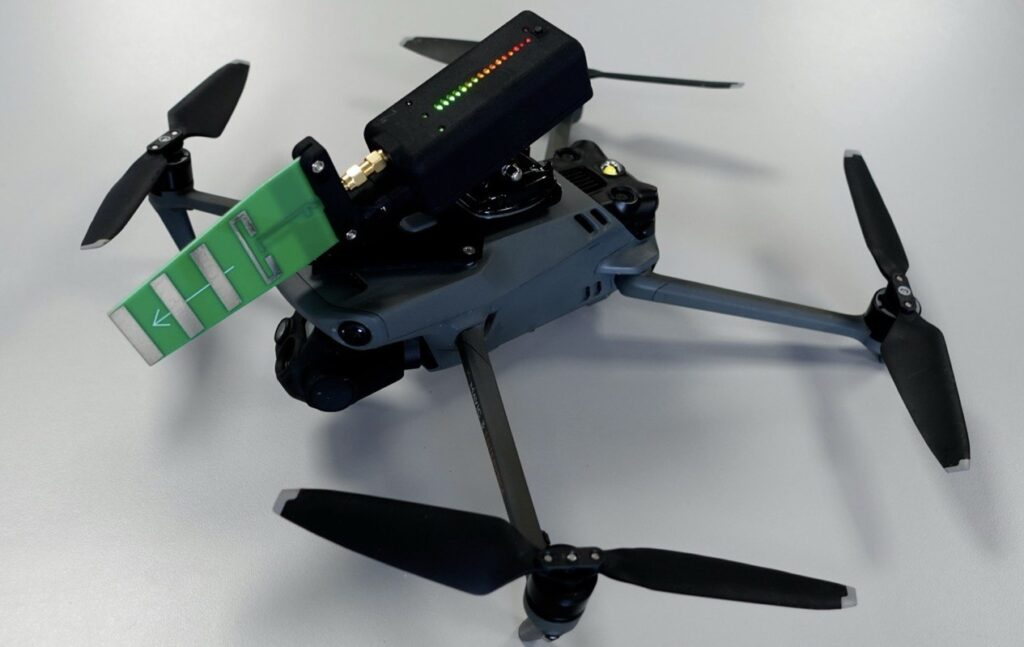
The new Drone Receiver (XR) can be paired with a drone, allowing the signal strength to be displayed on the remote controller. This offers a significant advantage, as sensitivity and range are greatly increased when operating from higher altitudes. When used in combination with the VFT160, the range is extended to 4 kilometers. Compatible with the DJI Mavic 3 Enterprise and the DJI Matrice 4 Enterprise.
The VespaFinder App
If you are near the nest, anyone with an Android or iOS smartphone can help with the search using a special app called Vespa Finder.
This free app can predict the nest’s location using the wick pot method (Jersey method), which allows the nest to be found in 20–30% of cases without the need for a transmitter.
When a signal is received on the app, all other users will also see that signal on their app. This allows a group of app users to quickly locate an Asian hornet nest. You can do this while walking, cycling, or in combination with ultra-sensitive receivers mounted on a car.
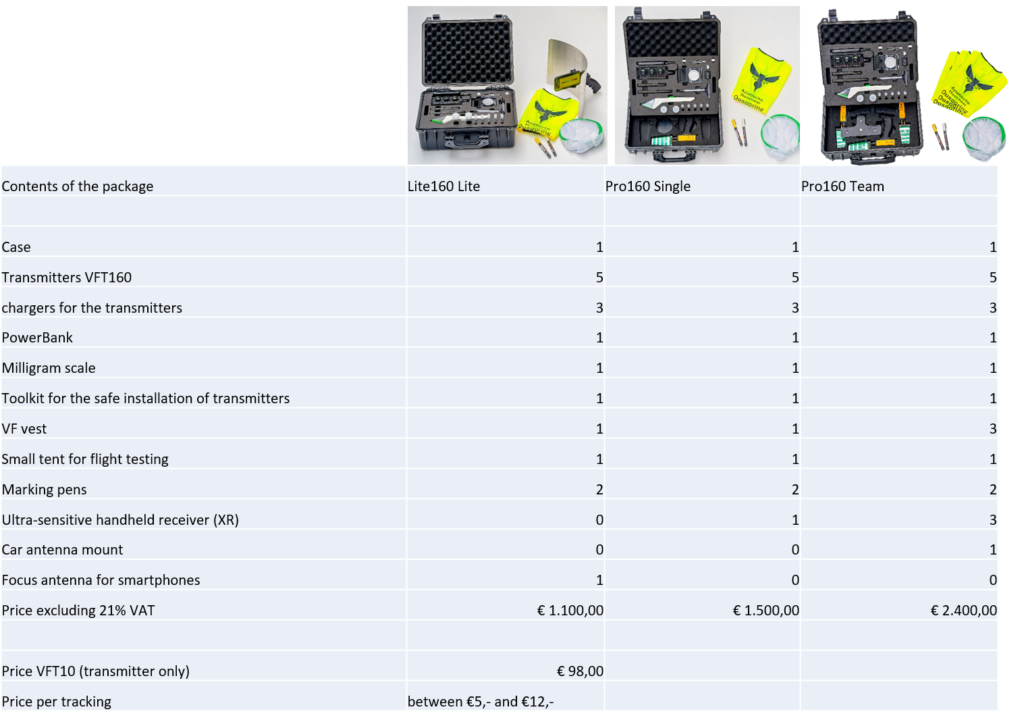
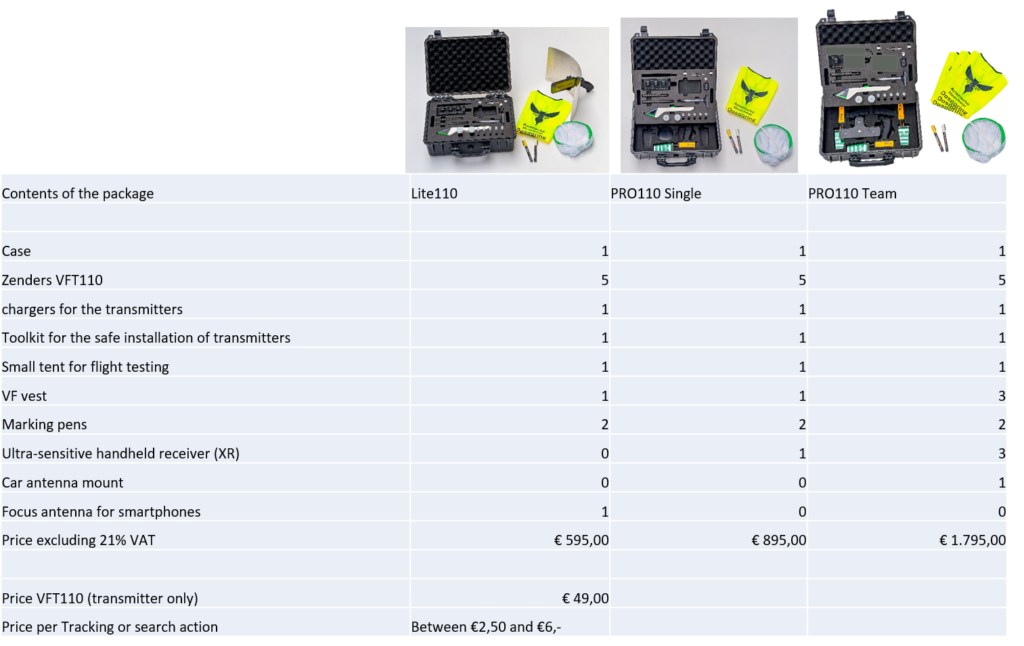
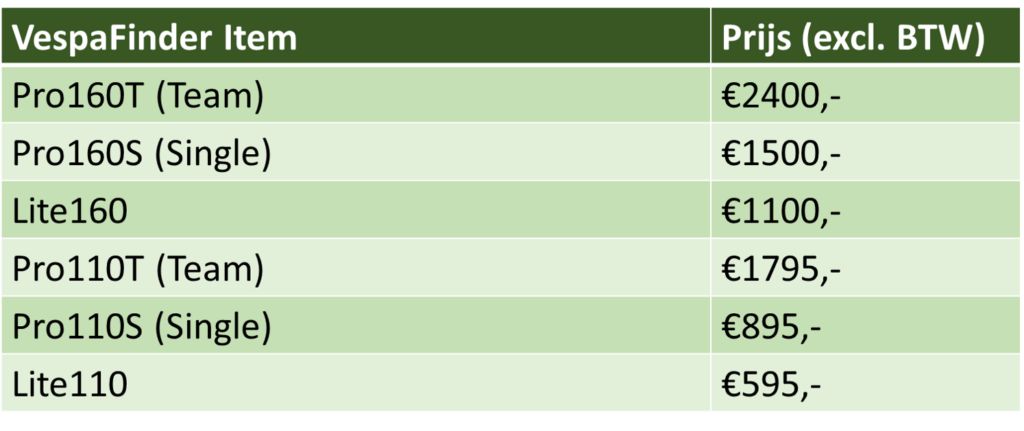
Prices for Vespa Finder tracking kits
Prices for individual transmitters:
VFT160: €98 (price per search starting at €5 per nest)
VFT110 at €49 (price per search starting at €2.50 per nest)
The transmitters are reusable/rechargeable and therefore suitable for locating multiple nests.
(Pro110/Lite110/VFT110 Available starting June 2026)
Prices are exclusive 21% VAT.
Course on detecting Asian hornet nests.
In this comprehensive course video, you will learn step by step how to effectively locate Asian hornet nests. The video covers making a wick pot, marking hornets with color codes, and using the Vespa Finder app to determine the flight direction and search area. It also delves deeper into advanced techniques such as “tagging” hornets to track them directly to their nest.
A field wasp with the VFT80
This video shows a 100 mg field wasp flying with the 80 mg VFT80 transmitter.
The VFT80 will be used for research on bees and lemonade wasps.
We developed the VFT110 for locating Asian giant hornet nests, as this transmitter can be automatically retrieved using a magnet.
YL-Asian Hornet Flying with VFT160
This video shows an Asian hornet weighing 209 mg flying with the 160 mg VFT160 transmitter. An Asian hornet can lift around 85% of its own body weight.